
Your Customer Says "Never Received." Tracking Says Delivered.
For brand CX and 3PL ops teams. A customer reported an $800 order never received, 75 hours after it was delivered, signed for, and photographed. The building's own log showed a friend collected it five minutes after dropoff. What to check — and in what order — when tracking says delivered and the customer says no.
The short answer
When tracking says delivered and the customer says they never received it, don’t assume a loss. In over 35% of WISMO tickets, the order was delivered correctly (Getcho delivery data, 2026 year to date) — the confusion is on the customer’s end. It’s with the doorman, in the package room, or already accepted by a friend or family member. What to check, in order: the delivery timeline, where the proof-of-delivery photo was actually taken, who in that building is allowed to sign, and the building’s own package log. With good data and a fast reflex — part of Getcho’s delivery monitoring suite — you can ensure these don’t turn into bad delivery claims, write-offs, or chargebacks.
The following is a real-world WISMO that was misplaced by the recipient. We use it as an example because it’s emblematic of a whole class of delivery failures:
- The brand was prepared to reship an $800 order, assuming it to be a standard carrier loss.
- The customer support ticket involved six people, including a support agent, a transportation manager, a warehouse operator, and an ecommerce manager. None of them had adequate information.
Getcho took responsibility for the delivery and used delivery data to resolve the misunderstanding.
The Verdict
A customer reached out to the brand’s customer service team reporting that they never received an $800 order. Shipping service: “next-day delivery.” Report time: 75h after delivery.
The courier collected both a signature and a proof-of-delivery photo — and a pretty good one at that (see below). The customer noted that they didn’t recognize the name or the signee. Even a signature isn’t bulletproof; it’s quite common for a claim to come on the heels of a signature. “I don’t know who Allan is.” Many of those are legitimate.
A call to the building confirmed receipt; the super found a record of the delivery lining up perfectly with the courier’s timestamp. So what happened then?
Fortunately, the record also included another note. “Friend collected the order from doorman about 5 minutes later.” That clears it up — two friends not communicating.
The Evidence
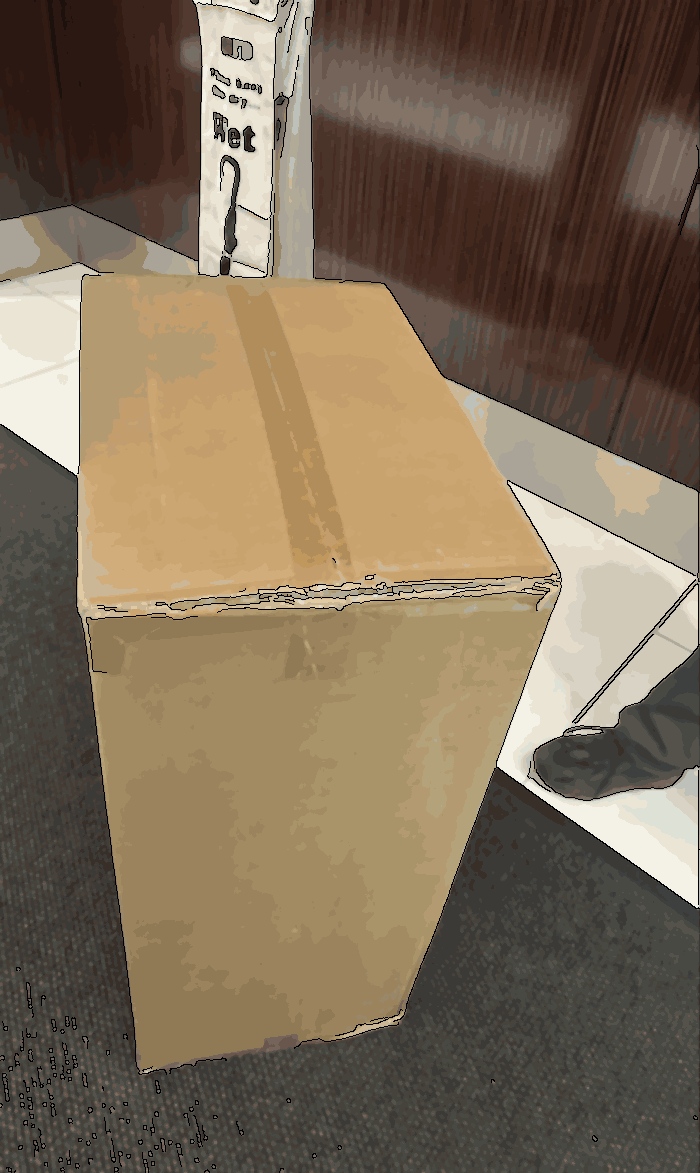 Dropoff POD: sealed carton in the package room, ~73 ft past the dropoff pin. Signature collected at the same time. Images lightly stylized for publication.
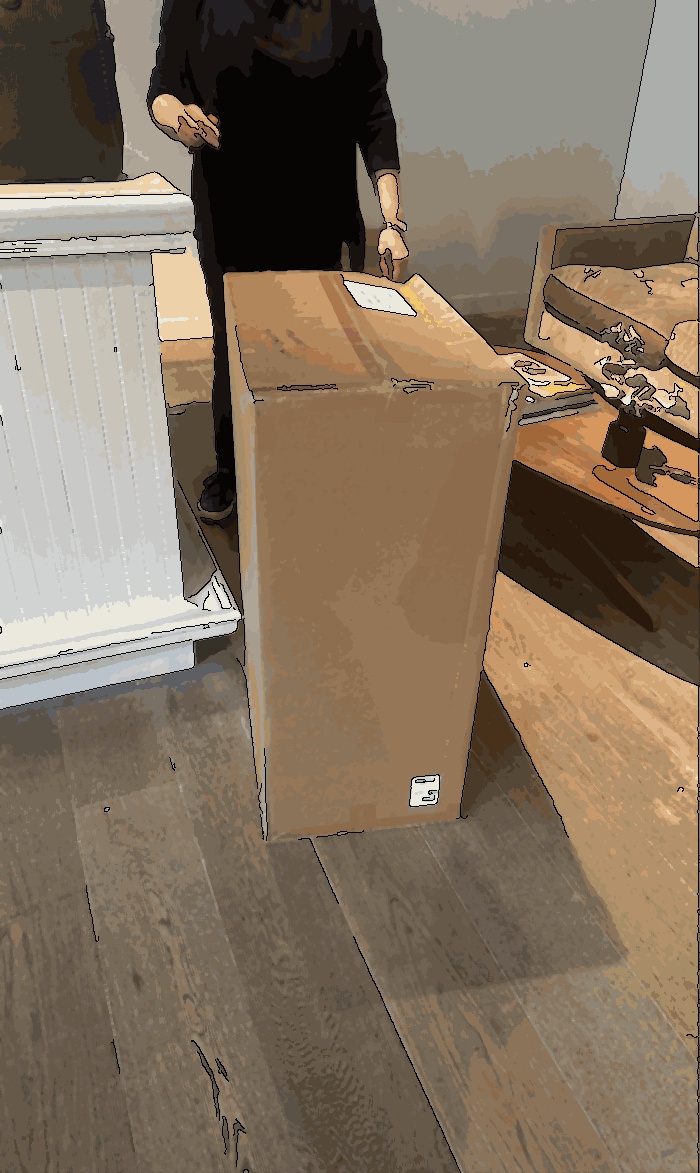 Pickup POD at the merchant, eight minutes earlier.
Timeline
- 5:23 PM — Order placed. Billing name and recipient name don’t match; the pickup ticket gets flagged “verify billing name.”
- 10:56 AM — Order ready for pickup at the brand’s SoHo store.
- ~11:40 AM — Courier collects the package. Pickup POD photo taken.
- 11:47 AM — Courier calls the recipient’s number. Nine seconds. Answered.
- 11:50 AM — Delivered. Eight minutes in transit, 1.08 miles. Signature collected. POD photo taken ~73 ft past the dropoff pin — the package room, exactly where the instructions said “doorman or package room can take it in.”
- ~11:55 AM — Per the building’s log: a friend of the recipient collects the package from the doorman. Nobody tells the person who placed the order.
- +75 hours — Customer contacts the brand: never received it, doesn’t recognize the name on the signature.
- Same afternoon — Timeline pulled: normal transit, normal dwell, a phone call. POD photo reviewed: real, indoors, right building. Call to the building: the super finds the log entry matching the courier’s timestamp to the minute — plus the note about the friend.
- Case closed. Package was in the household the whole time. $800 claim never filed.
What to check when tracking says delivered and the customer says it didn’t arrive
Cheapest evidence first. Each step either closes the case or tells you what to look at next.
- The delivery timeline. Transit time, how long the courier was stopped at the address, whether they called the recipient. A real delivery has dwell time and usually a phone call. Here: eight minutes in transit, a nine-second answered call, completion logged five meters from the pin. Real.
- Where the POD photo was taken, not just what it shows. The photo proves a package was set down somewhere; the capture location says where. Inside the building and past the door is the normal signature of a package-room handoff. Here: 73 feet past the pin, indoors, matching the “doorman or package room can take it in” instruction.
- Who is allowed to sign in that building. Doorman, porter, package room, a roommate, a guest. In a doorman building the name on the signature is someone the customer has never heard of more often than not. Find out who it is before treating it as a problem.
- The building’s own log. Doorman buildings keep one. It took one call; the super matched the delivery to the courier’s timestamp and read out the line about the friend. This is the step that closes most of these cases.
- Only then: the refund or the carrier claim. By this point you either have the package’s location or you have the evidence to file with. Starting here is how a $16 delivery becomes an $800 payout.
Should you refund when tracking says delivered?
Not on the customer’s first message, and not on the “delivered” scan alone. Refund when the evidence says the package left the chain of custody before the customer could reasonably get it — a POD photo at the wrong building, a signature the building staff can’t identify, a completion event with no dwell time. Hold, and investigate, when the POD and location put it inside the right building; that’s a “find it” problem, not a refund problem, and it’s usually solved the same day. The customer isn’t the enemy in either case. The report in this case was sincere; it was also wrong.
What if the customer doesn’t recognize the signature?
Expect it. In a doorman or front-desk building the person authorized to sign is almost never the customer, and the name on the receipt means nothing to them. “I don’t know who Allan is” is a reason to ask the building who Allan is, not a reason to assume fraud. This order had one more wrinkle that shows up constantly: it was placed and billed by one person and addressed to another, and the pickup ticket had flagged the name mismatch. Three people had a stake in the box and none of them were talking to each other. The signature was real, the delivery was real, and the customer still had no idea where their order was.
Who’s responsible — the brand, the carrier, or the customer?
In practice, once a carrier has a delivered scan plus a signature or photo, their responsibility is over and they will say so. Payment processors lean the same way: PayPal’s seller protection, for example, wants delivery confirmation to the buyer’s address and, on orders of $750 or more, signature confirmation — this order cleared both. So the exposure lands on the brand, and the brand’s only real lever is speed: investigate while the doorman still remembers, the log is still on the desk, and the chargeback clock hasn’t run. Real theft is the minority explanation anyway — Capital One Shopping’s 2025 research puts it at roughly 1 in 228 deliveries. The other 227 are somewhere, and most of them are findable.
Takeaways
- Most people in the business call proof-of-deliveries PODs. Maybe sometimes they should be called CYAs. It’s most likely that if the facts were the exact same, except there were no POD, the carrier would be writing a check for $800.
- The evidence doesn’t get better with time. At 75 hours the super still had the log on the desk. At a week, the doorman has handled 300 packages since and the driver has done 200 stops. At 30 days, the carrier’s claim window is closing and the chargeback has already landed. The same case, investigated a week later, is probably an $800 refund.
- ”Not received” is a question, not a verdict. Answer it before you pay it.
Case File
| Symptom | Marked delivered with signature; customer reports nothing arrived and doesn’t recognize the signature |
| Business type | Premium leather-goods brand, SoHo |
| Order value | ~$800 |
| Reported | ~75 hours after the delivery event |
| Root cause | Order collected by the recipient’s friend; never communicated |
| Evidence that cracked it | POD capture location + the building’s package log |
| Claim avoided | $800 |
Got a delivery mystery of your own? Request a demo and see how Getcho’s tracking, proof-of-delivery, and AI issue resolution make these investigations take minutes instead of days.